Disconnected context
ERP, engineering files, supplier communication and workbooks never form one reliable operational picture.
Industrial AI execution layer
Anvil connects engineering, quality, procurement, planning and production—turning fragmented data, documents and decisions into controlled action.
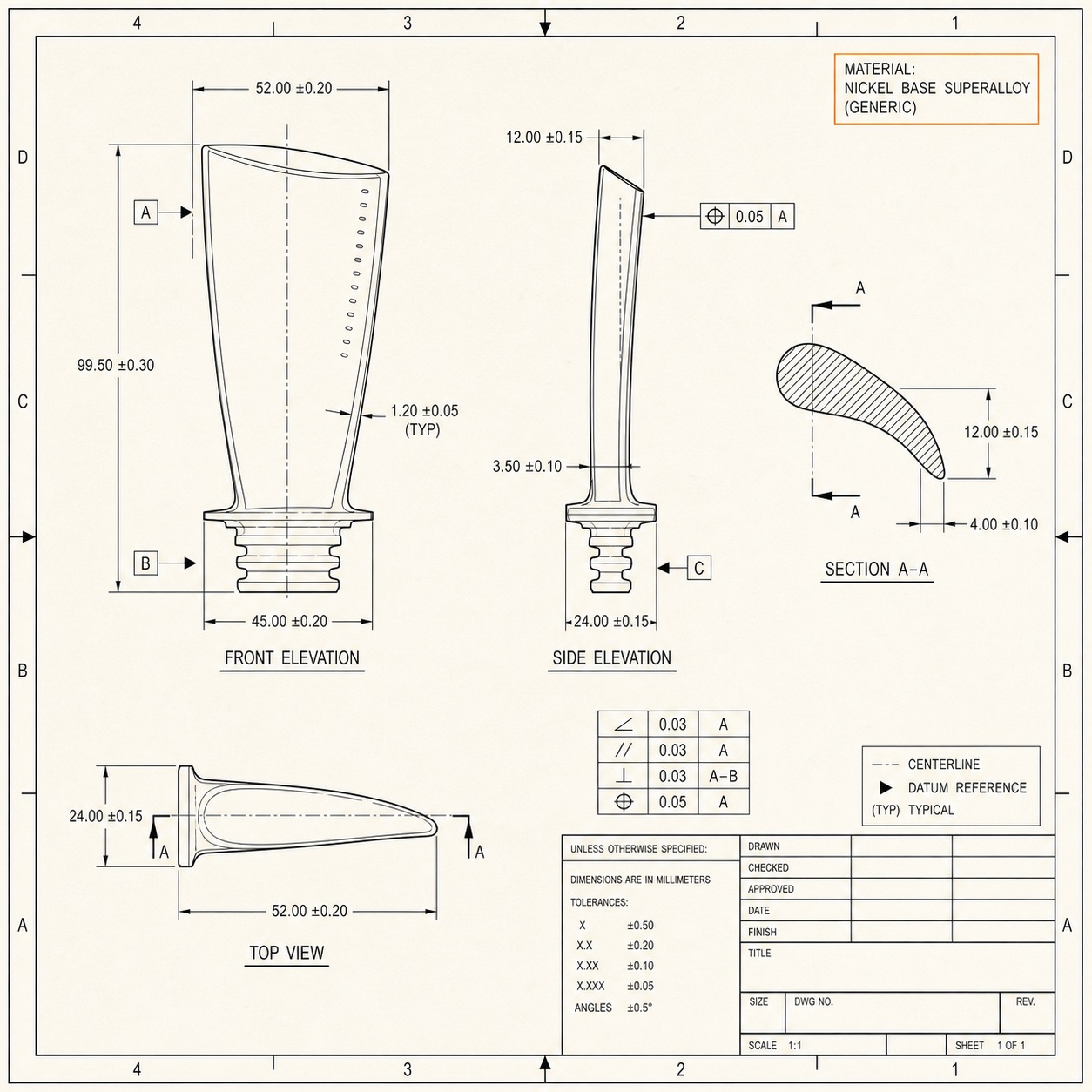
Built for complex discrete manufacturing
01 / The operating gap
ERP, engineering files, supplier communication and workbooks never form one reliable operational picture.
Experts spend their time chasing information, reconciling changes and moving decisions between functions.
Risk becomes visible only after a delivery slips, a requirement conflicts or production is already blocked.
The logic that keeps work moving lives with a few experienced people and cannot scale with the operation.
02 / The platform
Anvil creates one operating context around the systems manufacturers already run, then gives domain-aware agents the tools and boundaries to act.
Bring together ERP, engineering files, email, supplier data and operational systems.
Build shared manufacturing context from documents, data, rules and institutional knowledge.
Apply domain-aware agents, SOPs and deterministic rules to each operational decision.
Coordinate actions across teams and systems—not just generate another recommendation.
Keep approvals, evidence, permissions and a complete audit trail around every action.
Parts, suppliers, requirements, operations, decisions and commitments connected in one context.
03 / Product suite
Start with the workflow where delay and manual effort are most expensive. Expand on shared context, integrations and governance.
Anvil Engineering
Turn drawings, specifications and contract reviews into a validated job record and controlled production package—with evidence beside every engineering decision.
Track confirmations, committed dates and changes. Escalate only the exceptions that need a person.
Move from customer BOM to comparable RFQs, approved alternates and buyer-ready sourcing packages.
Identify EOL, PCN, lead-time shifts and shortages—and show their impact on the production plan.
Detect revision impact, update affected outputs and coordinate implementation across functions.
Track milestones, dependencies, customer commitments and production-readiness blockers.
04 / Integration layer
Anvil is designed to operate across the existing manufacturing stack—not replace it. Integrations bring context in and allow approved actions to move back into the systems of record.
Integration availability is defined per deployment
05 / Governed autonomy
Anvil automates the coordination work around production while keeping people in control of the decisions that carry engineering, financial or operational risk.
Every decision points back to data, a document or a rule.
Approvals are routed according to risk and responsibility.
Agents operate only inside defined systems and policies.
Inputs, rules, actions and outputs remain versioned.
06 / Flagship proof
The Casting workflow produces controlled, reviewable manufacturing outputs—and proves the operating model Anvil can extend across the factory.
07 / Built to expand
Every implementation adds reusable context, rules and integrations—allowing Anvil to expand from engineering readiness into coordinated execution across the operation.
Design partnerships
Tell us where engineering or operational coordination slows production down. We will define a focused pilot with clear inputs, actions and success metrics.